We humans devote much time and energy to helping others. We send money to famine victims halfway around the world—or to save whales. We stay up all night to comfort a friend with a broken relationship. We stop on a busy highway to help a stranded motorist change a flat tire. Why do we do these things? What is our motive? The dominant answer in Western thought is well expressed by the wise and witty Duke de la Rouchefoucauld, 2001 : “The most disinterested love is, after all, but a kind of bargain, in which the dear love of our own selves always proposes to be the gainer some way or other” (...

Kaitlyn works Monday through Friday, 9-5. Sitting at her desk on Friday afternoon, Kaitlyn glances at the clock. It is 4:30 pm. The end of the workweek is a mere 30 minutes away. Visions of a relaxing weekend begin to creep in. And then, the phone rings. A distraught coworker is calling to ask for a big favor. His kids are really sick, he feels there’s no way he’s going to be able to prepare for an upcoming meeting on Monday, and he’s wondering if Kaitlyn might be able to run it for him. She’s not up-to-date on the agenda, so it is going to take a fair amount of time to prepare. If she agrees...

Have you ever wondered why, when you see someone stretch out and yawn, suddenly, you start to feel drowsy and feel the urge to do the same? Or how about the tendency of people to copy each other’s postures? In social psychology this phenomenon is called postural mirroring. All this mimicking is the result of so-called mirror neurons in our brain.

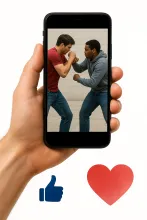
From fight videos on TikTok to hate comments on Instagram, violence is omnipresent online, but what does it do to our empathy? Studies reveal that repeated exposure to digital aggression can reduce our ability to feel concern or discomfort when witnessing others' pain, especially in teens. Yet empathy doesn’t have to erode. This article explains how online violence affects our ability to care and offers practical strategies to maintain compassion in virtual spaces and effectively strengthen empathy over the long term.

Marc Fucarile, a 34-year old native of Stoneham MA, lost his right leg, nearly lost his left, was peppered with shrapnel, and suffered severe burns when the second bomb exploded at the 2013 Boston Marathon. Shortly thereafter, from his hospital bed, Marc described his situation saying, “There’s...