This paper discusses honor and its effects on emotion. The paper is divided into two parts. In the first part, the definition of honor is discussed. This section answers the questions ‘what is honor,’ and ‘are there different types of honor?’ Later, there is an overview on the ways in which honor influences emotional experiences and expressions. Throughout the paper, conclusions are reached based on honor and emotion research in Mediterranean, Northern European, North American and Middle-Eastern cultures. Imagine as a 7-year-old not knowing the meaning of the word shame. This would seem...

Have you ever thought about where your strong moral convictions (if any) come from? For example, let`s assume you feel strongly about the sacredness of the Qur’an, and feel outraged when someone mocks your Holy Book. Or, alternatively, you feel strongly about freedom of speech, and hence feel outraged when those mocking a holy book are threatened and attacked by those who perceive this as a transgression of their sacred values. Is it, in these cases, a strictly personal part of who you are that reacts so strongly, or is your conviction perhaps derived from important groups you are a member of?

When people think about fairness, they often think about social norms and values, or about general moral principles such as equality between humans and impartiality when solving conflicts. Fairness is thus often associated with a genuine concern for other people's well-being. In a variety of scientific disciplines, fairness is even equated with altruism and contrasted with egoism (e.g., De Waal, 1996; Sober & Wilson, 1998).

My first extended stay in Southeast Asia in Singapore nearly five years ago served as a true eye opener. Yes, I was fully aware that I was about to enter a country that was different from what I had known so far. I was eager and curious to learn and broaden my horizons to whatever might come. However, the first days were rather disappointing: nothing much different from what I knew. Sometimes it was hard to comprehend 'Singlish' (as Singaporean English is being referred to) and, at least for European standards, to get used to the extreme heat and humidity. It was only slowly that I discovered...

All of us are stressed every now and then. There are phenomena we usually associate with stress, like health risks and feelings like fear, panic, or insecurity. But stress might also have effects we normally don’t think of; recent studies suggest it can dramatically influence our decision-making in a number of—perhaps unexpected—ways. This becomes particularly relevant in the moral context: people who are put under stress behave more compassionately in some situations, yet the opposite can be true in other situations. Why is this and what does this tell us about our morality? Maybe the...

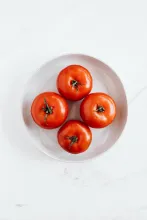
On The Good Place, people are judged on the morality of virtually everything they do. This might seem unfair, but what really counts as moral and non-moral? Evidence from psychology suggests that there may be no clear distinction between moral and non-moral cases. If you’re like most people, you probably don’t consider buying a tomato to be a moral decision. Which is why it was so startling, near the end of Season 3 of the TV series The Good Place , when the main characters discovered that everyone on Earth was being judged for their tomato purchases, among countless other things, in order to...

Social media is far more than a tool for communication, it is a digital social environment at scale. Unlike any other space before it, social media platforms expose us to the judgements of others. From expressions of admiration to condemnation, we are immersed in the opinions of others with unprecedented frequency. In this article, we explore how such online environments hold the potential to distort our perception of societal consensus on core moral issues and influence our understanding of what is considered right and wrong in society.

How do we make moral judgments? Are people cold, calculating Vulcans? Or are they affectively hot hedonists? Researchers often present morality as a war between vying ‘hot’ and ‘cold’ processes, but in this two-part blog post I argue that the distinction is a false choice. Morality is both hot and cold, but not in the way previous research leads people to believe.

Despite the resurgence of interest in free will, there remains confusion and disagreement regarding free will’s role in social life, in particular, how people understand free will and whether free will guides blame and praise for others. In this blog post I argue that we need to pay closer attention to the folk concept of free will in order to resolve the confusion surrounding free will in everyday life.