
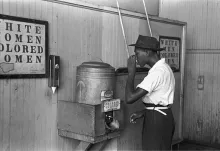
In the midst of racial segregation in the U.S.A and the ‘Jim Crow Laws’, Gordon Allport (1954) proposed one of the most important social psychological events of the 20th century, suggesting that contact between members of different groups (under certain conditions) can work to reduce prejudice and intergroup conflict. Indeed, the idea that contact between members of different groups can help to reduce prejudice and improve social relations is one that is enshrined in policy-making all over the globe. UNESCO, for example, asserts that contact between members of different groups is key to...

Humans are passionate creatures. Our passions drive us, gives us a sense of belonging, and unite us as few other things can. Still, there are only a couple of passions that have been constants down the ages, passions that people from every place and culture can agree on. Love is one, but another is that "those no-good bastards over there are trouble." Of course, we quibble endlessly over the exact definition of "those" -- every culture, pretty much, has had a different group in mind. But the singular fact of prejudice per se was as recognizable in Ancient Greece, Rome, and Samaria as it is...
- Read more about The Double Edged Passion
- Log in to post comments

Most people would probably agree that “women can’t drive” is a sexist statement. But what about saying that “women are nurturing”? Isn’t that just a nice compliment? At first glance, these kinds of gender stereotypes often appear relatively harmless. In reality, they are anything but: seemingly positive gender stereotypes play a crucial role in reinforcing traditional gender roles and maintaining status inequalities between men and women. Sexism, #Meetoo and the backlash The recent #metoo movement against sexual abuse and harassment was very successful in bringing to light the scale of the...
Gender and sexual minorities in the United States still face discrimination and a number of challenges. What are the workplace experiences of LGBTQ+ individuals and is the modern organization LGBTQ+ friendly? Read more to find out. With the 50 th anniversary of the Stonewall riots marked by June of...

In this blog post, I discuss how people respond to information about their implicit racial bias—automatic attitudes and beliefs that favor one ethnic group over another. Although people can be defensive, emerging research suggests there are benefits to accepting implicit racial bias and being aware of this subtle prejudice.

In this blog post, I describe new evidence that thinking about political ideology on a single liberal/left to conservative/right spectrum masks important nuances in the origins of political ideologies and in the way that people apply those ideologies to important judgments, including those of other people (i.e., prejudice).