  • INT
  • DE
  • FR
  • IT
  • NL

User account menu

  • Log in
Home
  • The Magazine
    • Magazine Staff
  • Blog
    • Blog Staff
  • Book Reviews

Psychology for You!

  • Issue
    10/2025

    Starting early: How caregivers can support their children's emotion regulation

    • written by
    • Katharina Demke,
    • Mara Hüttner,
    • Dr. Avelina Lovis Schmidt

    Emotion regulation in children can be challenging: screaming, loud crying, temper tantrums at the supermarket checkout - many people are familiar with such situations. What role do caregivers play in these moments, and how can they effectively support their children? The good news is that even small actions can have a lasting positive effect, strengthening children’s emotion regulation for life.

    read more
    • Log in to post comments
  • Issue
    09/2025

    Viral and harmful: Violence in media and its impact on empathy

    • written by
    • Mira Fauth-Bühler

    From fight videos on TikTok to hate comments on Instagram, violence is omnipresent online, but what does it do to our empathy? Studies reveal that repeated exposure to digital aggression can reduce our ability to feel concern or discomfort when witnessing others' pain, especially in teens. Yet empathy doesn’t have to erode. This article explains how online violence affects our ability to care and offers practical strategies to maintain compassion in virtual spaces and effectively strengthen empathy over the long term.

    read more
    • Log in to post comments
  • Issue
    09/2025

    Internet, dating, addiction: A match made in heaven

    • written by
    • Marina F. Thomas,
    • Sylvia Dörfler,
    • Gloria Mittmann,
    • Verena Steiner-Hofbauer

    Dating apps are said to have turned dating into an addiction. Instead of efficiently connecting people for in-person dates, users may get lost in “binge swiping”. But what makes it so hard to stop swiping – and when does it become a problem? We review existing research and explain what researchers mean by “online dating addiction”, why the science isn’t so simple, and what you can do to resist the pull.

    read more
    • Log in to post comments
  • Issue
    09/2025

    Digital moral distortion: How social media can negatively shape our judgement of right and wrong

    • written by
    • Tim-Dorian Knöchel,
    • Sarah Vahed

    Social media is far more than a tool for communication, it is a digital social environment at scale. Unlike any other space before it, social media platforms expose us to the judgements of others. From expressions of admiration to condemnation, we are immersed in the opinions of others with unprecedented frequency. In this article, we explore how such online environments hold the potential to distort our perception of societal consensus on core moral issues and influence our understanding of what is considered right and wrong in society.

    read more
    • Log in to post comments
  • Issue
    09/2025

    The viral power of migrant crime messaging: Fear, emotion, and algorithms

    • written by
    • Mary Ortega

    Fear-driven stories about migrant crime continue to circulate widely across social media platforms. This article examines how emotional triggers, psychological shortcuts, and platform design interact to influence public perception. The result is a digital environment where fear spreads faster than facts and reinforces harmful stereotypes.

    read more
    • Log in to post comments
  • Magazine Issue 10/2025

    Starting early: How caregivers can support their children's emotion regulation

    written by: Katharina Demke, Mara Hüttner, Dr. Avelina Lovis Schmidt
  • Magazine Issue 09/2025

    Viral and harmful: Violence in media and its impact on empathy

    written by: Mira Fauth-Bühler
  • Magazine Issue 09/2025

    Internet, dating, addiction: A match made in heaven

    written by: Marina F. Thomas, Sylvia Dörfler, Gloria Mittmann, Verena Steiner-Hofbauer
  • Magazine Issue 09/2025

    Digital moral distortion: How social media can negatively shape our judgement of right and wrong

    written by: Tim-Dorian Knöchel, Sarah Vahed

In-Mind Blog

  • 26.10.2014 |

    Does discrimination fit a prototype?

    by: Aaron Moss
    In this blog post, I discuss what information people use to decide whether a behavior constitutes discrimination. Similar to the way people organize categories and identify objects, I review research... more
  • 18.10.2014 |

    The missing heritability problem

    by: Marcus Munafo
     In my last post I described the transition from candidate gene studies to genome-wide association studies, and argued that the corresponding change in the methods used, focusing on the... more
  • 14.10.2014 |

    When science selects for fraud

    by: Shauna Gordon-McKeon
      Natural selection is the process by which populations change as individual organisms succeed or fail to adapt to their environments. One of the more famous examples of natural selection... more
  • 20.09.2014 |

    The reason that you need to feel good about yourself in order to be happy might not be what you think it is

    by: Marieke van Egmond
    Do you feel the need to feel good about yourself in order to be happy? Research suggests that if you have a lot of opportunities to make new friends, it... more
  • 20.09.2014 |

    Patriot Acts: Why the USA’s recent decrease in national glorification might be a good sign

    by: Cathleen Clerkin
    In this blog post, I share a recent report which says that Americans are less fervent about their country now than they’ve been in the recent past. However, I also... more
  • 16.09.2014 |

    When having meaning in life helps – and why

    by: Matthew A. Sanders
    This blog examines the search for meaning in life and gives an explanation for why people seek meaning.  Briefly, modern life (relative to our hunter-gatherer past) places people in an... more
  • Load more blog posts

Book Reviews

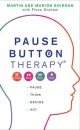
Pause Button Therapy

by: Christopher Perez

Most Read

  • Magazine Issue 02/2021

    When I Get That Boring Feeling: Sex as Escape from Boredom

    by: Andrew Moynihan
  • Magazine Issue 09/2025

    Scrolling against hate: Developing critical media competence to counter online antisemitism

    by: Agata Maria Kraj, Özen Odağ, Larisa Buhin, Jannis Niedick, Justine Kohl, Linda P. Juang
  • Magazine Issue 06/2024

    Psychological Aspects of Elite Performance in New Olympic Disciplines: The Case of Climbing

    by: Xavier Sanchez, Julian Henz, Cécile Martha, Jerry Prosper Medernach
  • Magazine Issue 06/2025

    Why we’d buy a microwave from BODIKA_1996 but not from KODIBA_1996 – Articulation movements and their effects on judgments and decisions

    by: Moritz Ingendahl
  • Magazine Issue 05/2024

    Never fear, a moral expert is here

    by: Susanne M. Schmittat, Pascal Burgmer

The Inquisitive Mind Magazine is supported by:

  • DGPs
  • C-SEB

Menu

  • The Magazine
  • Blog
  • Book Reviews
  • facebook
  • twitter
  • instagram
  • print

About Us

In-Mind is a voluntary science communication project. We enable scientifically working psychologists to present their research topics in a scientifically sound, understandable and entertaining way for an interested audience: Psychology by scientists for everyone. More

Footer menu

  • Contact
Clear keys input element