Athlete burnout is a growing concern in sport, particularly among elite athletes who compete at the highest level, such as the Olympic Games. It is characterized by the symptoms of physical and emotional exhaustion, a reduced sense of athletic accomplishment, and sport devaluation. The present article will explore its causes and consequences. It also aims to guide the creation of effective strategies for preventing and mitigating burnout in elite athletes who will compete during the Olympic Games.

In Olympic athletes, the heart and the mind team up to achieve success. This synergy can be tracked using heart rate variability (HRV). In this article, you will learn how changes in heart rhythm can boost Olympic athletes' training, help them recover from setbacks, and enhance their mental strength. Learn easy and effective techniques that tap into this heart-mind connection to help athletes perform their best at the Olympics.

Athletes and fans believe to be superior when competing at home. Will the French believe the same at this year’s Olympics in Paris? We review the psychological explanations for a home advantage and predict that French athletes will perform better at home, but, they are not unbeatable.

It is a common myth that perfection and ‘rising above yourself’ are required to clinch Olympic gold. Very rarely, however, do athletes realize a perfect race or match. If athletes nonetheless focus solely on this inspiring but virtually unattainable goal, they may underachieve in the big moments. From a psychological perspective, peak performance is also about controlling the controllables, acceptance, composure, focus on the task at hand, limiting performance losses, and being prepared for setbacks.

At the end of their Olympic careers, many athletes acknowledge the contributions of a hidden participant: their parents. In the present article, the authors review the pivotal impact of parents’ support for children’s development and success in elite sports and share insights on what constitutes positive parental involvement.
Editor: Elisa Bisagno Editorial Assistant: Rinat Meerson, Sofia Calderon This article has also been translated into German , French and Italian . Inhale. Exhale. Inhale. Exhale. Are you mindful of your breathing pattern? In sports, having control over one’s own breathing pattern and its regulation represents a prominent advantage. The authors draw upon empirical findings, providing an overview of the science behind voluntary breath modification and its role in Olympic athletes’ performance. Consider the example of Emma, a swimmer preparing for the upcoming Summer Olympics. To prepare her mind...
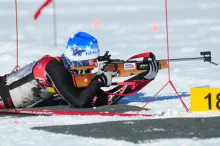
The presence of other people is inevitable in sport and dealing with it is crucial for high-level performance. This article presents the potential explanation of social inhibition or choking under pressure in competitive contexts due to the presence of others and suggests ways to help athletes to prevent them.

In Olympic athletes, superior physical performance is clearly evident on observation. The non-visible cognitive processes also contribute to successful performance, yet they are still weakly researched and their mechanisms are unclear. With this article, we will provide insights into state-of-the-art research on the cognition-performance link in sports, focusing on elite athletes preparing for the Olympic Games. To do so, we will illustrate challenges associated with cognitive testing in the field of competitive sports, present solutions, and pinpoint how developing sport-specific vs. general cognitive measures can pave the way for individually tailored cognitive interventions.

This article focuses on the basics of normal sleep and the various sleep problems in competitive sports athletes. Strategies and tips for improving sleep behaviour of athletes before, during, and after major competitions such as the Olympic Games are be provided.