
  • INT
  • DE
  • FR
  • IT
  • NL

User account menu

  • Log in
Home
  • The Magazine
    • Magazine Staff
  • Blog
    • Blog Staff
  • Book Reviews

Psychology for You!

  • Issue
    10/2025

    Starting early: How caregivers can support their children's emotion regulation

    • written by
    • Katharina Demke,
    • Mara Hüttner,
    • Dr. Avelina Lovis Schmidt

    Emotion regulation in children can be challenging: screaming, loud crying, temper tantrums at the supermarket checkout - many people are familiar with such situations. What role do caregivers play in these moments, and how can they effectively support their children? The good news is that even small actions can have a lasting positive effect, strengthening children’s emotion regulation for life.

    read more
    • Log in to post comments

  • Issue
    09/2025

    Internet, dating, addiction: A match made in heaven

    • written by
    • Marina F. Thomas,
    • Sylvia Dörfler,
    • Gloria Mittmann,
    • Verena Steiner-Hofbauer

    Dating apps are said to have turned dating into an addiction. Instead of efficiently connecting people for in-person dates, users may get lost in “binge swiping”. But what makes it so hard to stop swiping – and when does it become a problem? We review existing research and explain what researchers mean by “online dating addiction”, why the science isn’t so simple, and what you can do to resist the pull.

    read more
    • Log in to post comments
  • Issue
    09/2025

    Digital moral distortion: How social media can negatively shape our judgement of right and wrong

    • written by
    • Tim-Dorian Knöchel,
    • Sarah Vahed

    Social media is far more than a tool for communication, it is a digital social environment at scale. Unlike any other space before it, social media platforms expose us to the judgements of others. From expressions of admiration to condemnation, we are immersed in the opinions of others with unprecedented frequency. In this article, we explore how such online environments hold the potential to distort our perception of societal consensus on core moral issues and influence our understanding of what is considered right and wrong in society.

    read more
    • Log in to post comments

  • Issue
    09/2025

    The viral power of migrant crime messaging: Fear, emotion, and algorithms

    • written by
    • Mary Ortega

    Fear-driven stories about migrant crime continue to circulate widely across social media platforms. This article examines how emotional triggers, psychological shortcuts, and platform design interact to influence public perception. The result is a digital environment where fear spreads faster than facts and reinforces harmful stereotypes.

    read more
    • Log in to post comments

  • Issue
    09/2025

    Dressed for the feed: The psychology of fashion in a filtered world

    • written by
    • Paola D'Elia

    Fashion balances expression and expectation, but on social media, it reshapes body image through constant comparison and self-objectification, often leading to anxiety and dissatisfaction. This article explores the psychological costs of online fashion and the pressures it places on self-perception, while also showing its potential to nurture self-awareness.

    read more
    • Log in to post comments

  • Magazine Issue 10/2025

    Starting early: How caregivers can support their children's emotion regulation

    written by: Katharina Demke, Mara Hüttner, Dr. Avelina Lovis Schmidt
  • Magazine Issue 09/2025

    Internet, dating, addiction: A match made in heaven

    written by: Marina F. Thomas, Sylvia Dörfler, Gloria Mittmann, Verena Steiner-Hofbauer
  • Magazine Issue 09/2025

    Digital moral distortion: How social media can negatively shape our judgement of right and wrong

    written by: Tim-Dorian Knöchel, Sarah Vahed
  • Magazine Issue 09/2025

    The viral power of migrant crime messaging: Fear, emotion, and algorithms

    written by: Mary Ortega
  • Magazine Issue 08/2024

    Bug or feature? Boredom feels aversive, and this is why it matters

    written by: Wanja Wolff, Katja Rewitz, Dr. Maik Bieleke
    In class, during exercise, at work: boredom is an everyday experience that is generally regarded as an annoying and rather useless nuisance. In keeping with this attested uselessness, boredom had... more
  • Magazine Issue 06/2024

    There is no place like home – How the French crowd may impact the athletes at the Paris 2024 Olympic Games

    written by: Edda van Meurs, Charlotte Behlau, Bernd Strauss
    Athletes and fans believe to be superior when competing at home. Will the French believe the same at this year’s Olympics in Paris? We review the psychological explanations for a... more
  • Magazine Issue 06/2024

    Heart Rate Variability (HRV): How Olympic athletes can use the heart-mind connection to boost their performance

    written by: Sylvain Laborde, Stefan Ackermann, Carla Alfonso, Uirassu Borges, Eva Crone, Maša Iskra
    In Olympic athletes, the heart and the mind team up to achieve success. This synergy can be tracked using heart rate variability (HRV). In this article, you will learn how... more
  • Magazine Issue 06/2024

    “Keeping the Olympic Flame Burning”: Protecting Athletes from Burnout in Sport

    written by: Sandrine Isoard-Gautheur, Henrik Gustafsson, Daniel Madigan
    Athlete burnout is a growing concern in sport, particularly among elite athletes who compete at the highest level, such as the Olympic Games. It is characterized by the symptoms of... more
  • Magazine Issue 06/2024

    In the shades of the rings – experiences of interpersonal violence in elite sports

    written by: Julia T. Schwender, Teresa Greither, Helena Schmitz, Laurie Schwab
    The pursuit of the Olympic dream is overshadowed by the pervasive issue of interpersonal violence in sport. Despite the challenges, a growing body of research and initiatives is dedicated to... more
  • Magazine Issue 06/2024

    Virtual reality training in Olympic sports: Promises and pitfalls

    written by: Fabio Richlan, Jeremias Braid
    The advent of virtual reality technology provides Olympic athletes and coaches with manifold new possibilities for training and competition preparation. Although promising and increasingly backed up by scientific research, it... more
  • Load More Issues

In-Mind Blog

  • 16.03.2019 |

    The Kids are Alright? An Interview with Well-Being Ambassador Will Williams and a Case for Bringing Mindfulness to Schools

    by: Matthew Baldwin, Will Williams
    The No Good Terrible Very Bad Day Imagine the last bad day you had. Maybe you were jolted out of a pleasant snooze by a complaining alarm. You’re late. You’re... more
  • 05.02.2019 |

    Call for Papers: Special Issue on Sexuality

    by: Marlene Werner
    We invite you to submit short review articles for a Special Issue on Sexuality at In-Mind Magazine, the online journal of the In-Mind Foundation. In-Mind Magazine is a peer-reviewed online... more
  • 13.12.2018 |

    No Excuses! Lay Judges Reject Exhaustion as a Reason for Failing to Help Others

    by: Jacob Goldstein-Greenwood, Paul Conway
    Imagine that your spouse has promised that they will wash the dishes cluttering your sink this evening; but, when they arrive home exhausted after a stressful day of back-to-back meetings... more
  • 25.09.2018 |

    Roadblocks to Mental Health Research

    by: Chris Millar
    Another busy ward round: a telephone rings; a nurse apologises to patients that the ward is too short-staffed to facilitate their leave this afternoon; a junior doctor furiously types up... more
  • 09.09.2018 |

    How to get into shape like the Hulk

    by: Anneloes Kip, Marleen Gillebaart
    Do you want to get into shape but find it hard to carry out your good intentions? The Hulk can help you! After summer vacation, chances are you are trying... more
  • 30.06.2018 |

    Doing ill for ‘the greater good’: Understanding what really went on in the Stanford Prison Experiment

    by: Alex Haslam, Stephen Reicher, Jay Van Bavel
    Just about every highschool and college psychology textbook offers extensive coverage of Zimbardo’s Stanford Prison Experiment (SPE). The meaning of the SPE seemed obvious — that when given roles with power, people naturally become brutal tyrants. This message has had lasting influence... more
  • Load more blog posts

Book Reviews

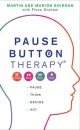
Pause Button Therapy

by: Christopher Perez

Most Read

  • Magazine Issue 06/2024

    Editorial: Mastering the Olympic Mind - The psychology behind peak sports performance

    by: Lisa Musculus, Elisa Bisagno, Sylvain Laborde, Ruud den Hartigh
  • Magazine Issue 03/2025

    Turning disagreements into opportunities: How couples can grow through constructive communication

    by: Lukas Repnik, Barbara Hadolt
  • Magazine Issue 05/2024

    Climate Stress in Everyday Life: How Can We Support Children?

    by: Julia Asbrand, Felix Peter, Claudia Calvano, Lea Dohm
  • Magazine Issue 11/2024

    How the voice gives away what you are feeling

    by: Zoé Nikolakis, Sebastian Wallot, Oliver Genschow
  • Magazine Issue 05/2021

    How Much Does the Menstrual Cycle Affect Emotional Life?

    by: Maria Gröndal

The Inquisitive Mind Magazine is supported by:

  • DGPs
  • C-SEB

Menu

  • The Magazine
  • Blog
  • Book Reviews
  • facebook
  • twitter
  • instagram
  • print

About Us

In-Mind is a voluntary science communication project. We enable scientifically working psychologists to present their research topics in a scientifically sound, understandable and entertaining way for an interested audience: Psychology by scientists for everyone. More

Footer menu

  • Contact
Clear keys input element