  • INT
  • DE
  • FR
  • IT
  • NL

User account menu

  • Log in
Home
  • The Magazine
    • Magazine Staff
  • Blog
    • Blog Staff
  • Book Reviews

Psychology for You!

  • Issue
    10/2025

    Starting early: How caregivers can support their children's emotion regulation

    • written by
    • Katharina Demke,
    • Mara Hüttner,
    • Dr. Avelina Lovis Schmidt

    Emotion regulation in children can be challenging: screaming, loud crying, temper tantrums at the supermarket checkout - many people are familiar with such situations. What role do caregivers play in these moments, and how can they effectively support their children? The good news is that even small actions can have a lasting positive effect, strengthening children’s emotion regulation for life.

    read more
    • Log in to post comments

  • Issue
    09/2025

    Internet, dating, addiction: A match made in heaven

    • written by
    • Marina F. Thomas,
    • Sylvia Dörfler,
    • Gloria Mittmann,
    • Verena Steiner-Hofbauer

    Dating apps are said to have turned dating into an addiction. Instead of efficiently connecting people for in-person dates, users may get lost in “binge swiping”. But what makes it so hard to stop swiping – and when does it become a problem? We review existing research and explain what researchers mean by “online dating addiction”, why the science isn’t so simple, and what you can do to resist the pull.

    read more
    • Log in to post comments

  • Issue
    09/2025

    Digital moral distortion: How social media can negatively shape our judgement of right and wrong

    • written by
    • Tim-Dorian Knöchel,
    • Sarah Vahed

    Social media is far more than a tool for communication, it is a digital social environment at scale. Unlike any other space before it, social media platforms expose us to the judgements of others. From expressions of admiration to condemnation, we are immersed in the opinions of others with unprecedented frequency. In this article, we explore how such online environments hold the potential to distort our perception of societal consensus on core moral issues and influence our understanding of what is considered right and wrong in society.

    read more
    • Log in to post comments

  • Issue
    09/2025

    The viral power of migrant crime messaging: Fear, emotion, and algorithms

    • written by
    • Mary Ortega

    Fear-driven stories about migrant crime continue to circulate widely across social media platforms. This article examines how emotional triggers, psychological shortcuts, and platform design interact to influence public perception. The result is a digital environment where fear spreads faster than facts and reinforces harmful stereotypes.

    read more
    • Log in to post comments

  • Issue
    09/2025

    Dressed for the feed: The psychology of fashion in a filtered world

    • written by
    • Paola D'Elia

    Fashion balances expression and expectation, but on social media, it reshapes body image through constant comparison and self-objectification, often leading to anxiety and dissatisfaction. This article explores the psychological costs of online fashion and the pressures it places on self-perception, while also showing its potential to nurture self-awareness.

    read more
    • Log in to post comments

  • Magazine Issue 10/2025

    Starting early: How caregivers can support their children's emotion regulation

    written by: Katharina Demke, Mara Hüttner, Dr. Avelina Lovis Schmidt
  • Magazine Issue 09/2025

    Internet, dating, addiction: A match made in heaven

    written by: Marina F. Thomas, Sylvia Dörfler, Gloria Mittmann, Verena Steiner-Hofbauer
  • Magazine Issue 09/2025

    Digital moral distortion: How social media can negatively shape our judgement of right and wrong

    written by: Tim-Dorian Knöchel, Sarah Vahed
  • Magazine Issue 09/2025

    The viral power of migrant crime messaging: Fear, emotion, and algorithms

    written by: Mary Ortega
  • Magazine Issue 04/2024

    Horoscopes – why we believe in them

    written by: Lea Sperlich
    When reading horoscopes, we often find sentences like: "Sometimes you are extroverted, sociable, and open-minded, sometimes rather introverted, skeptical, and reserved." If you feel that this statement applies to you... more
  • Magazine Issue 04/2024

    Does nudging have a place in politics? How decision-making contexts inevitably influence our behavior

    written by: Mario Herberz
    We like to see ourselves as masters of our decisions. However, psychological research has found that the context that surrounds our decisions influences our behavior often unnoticed - for better... more
  • Magazine Issue 03/2024

    Context matters: Why women are not worse negotiators than men

    written by: Moritz Burmester, Yannik Escher, Danna Oomen, Hannes Petrowsky
    Mastering the art of negotiation is key to being successful in everyday life and in a highly competitive and dynamic professional world. One widespread belief among laypeople is that women... more
  • Magazine Issue 02/2024

    That's cringe! – Wait a minute. What is cringe?

    written by: Thomas Feiler, Fabian Hutmacher
    The word “cringe” is on everyone's lips. What does it mean? How can it be described? An attempt to explain the phenomenon using established psychological constructs. more
  • Magazine Issue 02/2024

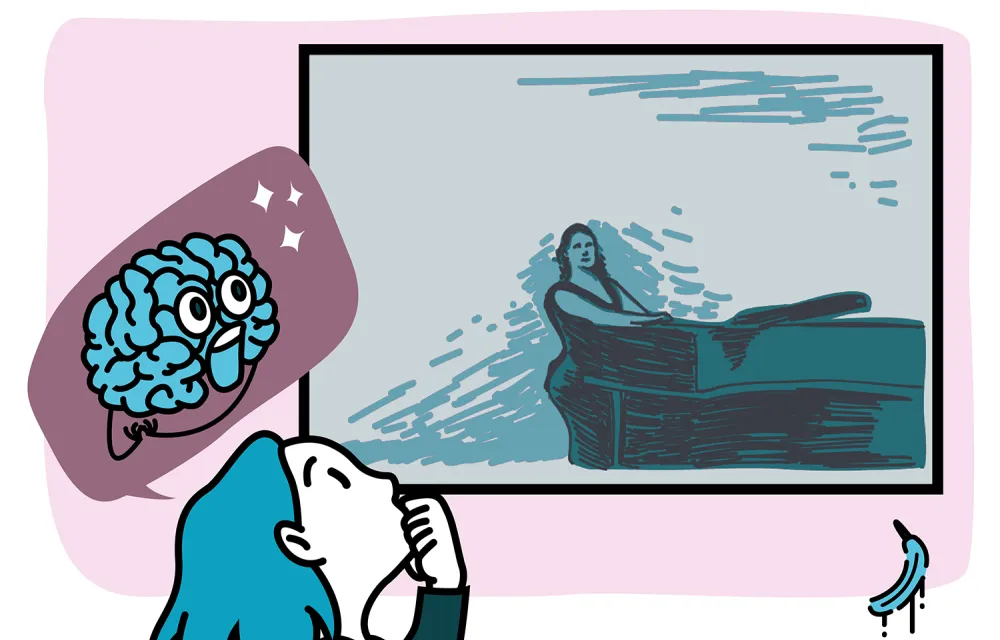
    Is there an art center in our brain? That’s bananas!

    written by: Sophie G. Elschner
    Artworks can move us deeply. But does that mean our brain treats them in a special way? We can find out by looking at how the brain processes art and... more
  • Magazine Issue 06/2023

    Learning styles: Why they don't exist but still persist

    written by: Martin Daumiller, Benedikt Wisniewski
    It is a common myth that for optimal learning, individual learning styles should be identified and specifically supported. This might include identifying someone as a visual learner and designing the... more
  • Load More Issues

In-Mind Blog

  • 18.02.2017 |

    Adverse Childhood Experiences and its lifelong consequences

    by: Marly van Oirschot
    Unfortunately, some children grow up with maltreatment and household dysfunction. In this post, I will explain how these adverse childhood experiences (ACEs) not only have a negative influence during childhood... more
  • 07.03.2016 |

    Marginal and Happy – How can people be culturally detached and well adjusted?

    by: Régine Debrosse
    Belonging to several cultural groups at the same time can be associated with complex feelings of group membership. In this post, I will provide an explanation for the phenomenon whereby... more
  • 07.02.2016 |

    Are conservatives really simple-minded?

    by: Lucian Gideon Conway III
    The current consensus in psychology is that political conservatives are uniquely simple-minded. Indeed, even the famous critic of political bias and Heterodox contributor Jonathan Haidt (and colleagues) suggested that there... more
  • 30.01.2016 |

    Foetus or child? Language and attitudes toward abortion

    by: Gosia Mikołajczak
    Due to moral, religious and cultural sensibilities, the topic of abortion still gives rise to controversy in many countries. In this post, I will discuss our research showing how language... more
  • 13.12.2015 |

    Refugees work placement: Call for collaboration

    by: Sanja Djordjevic
    Embed from Getty Images   At the moment, we are faced with one of the largest displacements caused by war since World War II. In the Netherlands only, more than... more
  • 25.11.2015 |

    Empathy and prejudice after attacks in Paris and Beirut

    by: Marly van Oirschot
    On Friday November 13th 2015, a group of at least 7 attackers started shooting and bombing at six locations in Paris, killing at least 129 people, while injuring more than... more
  • Load more blog posts

Book Reviews

Pause Button Therapy

by: Christopher Perez

Most Read

  • Magazine Issue 06/2024

    Editorial: Mastering the Olympic Mind - The psychology behind peak sports performance

    by: Lisa Musculus, Elisa Bisagno, Sylvain Laborde, Ruud den Hartigh
  • Magazine Issue 03/2025

    Turning disagreements into opportunities: How couples can grow through constructive communication

    by: Lukas Repnik, Barbara Hadolt
  • Magazine Issue 05/2024

    Climate Stress in Everyday Life: How Can We Support Children?

    by: Julia Asbrand, Felix Peter, Claudia Calvano, Lea Dohm
  • Magazine Issue 11/2024

    How the voice gives away what you are feeling

    by: Zoé Nikolakis, Sebastian Wallot, Oliver Genschow
  • Magazine Issue 05/2021

    How Much Does the Menstrual Cycle Affect Emotional Life?

    by: Maria Gröndal

The Inquisitive Mind Magazine is supported by:

  • DGPs
  • C-SEB

Menu

  • The Magazine
  • Blog
  • Book Reviews
  • facebook
  • twitter
  • instagram
  • print

About Us

In-Mind is a voluntary science communication project. We enable scientifically working psychologists to present their research topics in a scientifically sound, understandable and entertaining way for an interested audience: Psychology by scientists for everyone. More

Footer menu

  • Contact
Clear keys input element