  • INT
  • DE
  • FR
  • IT
  • NL

User account menu

  • Log in
Home
  • The Magazine
    • For Authors
    • Magazine Staff
  • Blog
    • For Authors
  • Book Reviews
  • The Foundation
    • Credits
  • Donate

Psychology for You!

  • Magazine Issue
    11/2025

    Understanding Anxiety, Encouraging Courage: What Families Should Know About Social Anxiety

    • written by
    • Nadine Vietmeier,
    • Jasper Froehlich,
    • Silas Rooß

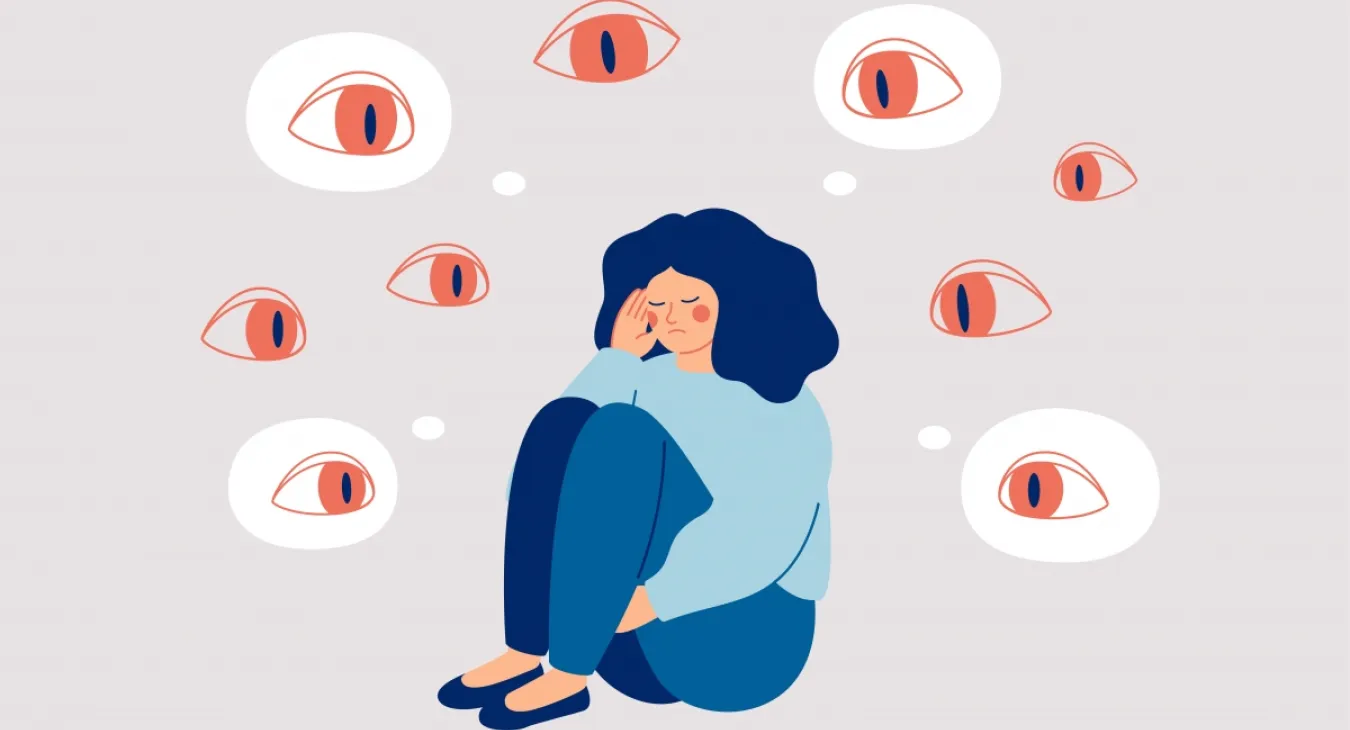
    Social anxiety is among the most common psychological challenges in childhood and adolescence—and it also presents major challenges for parents. How can they support their children without overwhelming them? What role does parental behavior play in the development and maintenance of anxiety? This article introduces the SPACE therapy program—a research-based parent training that shows how mothers and fathers can empathetically support their children in gradually overcoming social anxiety.

    read more
    • Log in to post comments

  • Magazine Issue
    11/2025

    Mastering Emotions: How Emotion Regulation Can Boost Your Athletic Performance

    • written by
    • Mira Fauth-Bühler

    Imagine standing on a balance beam. Your heart races, your palms sweat—your body is primed for peak performance. Now comes the crucial decision: how will you steer your emotions? Will you let the tension paralyze you, or harness it as your driving force? Emotion regulation doesn’t mean avoiding fear; it means transforming it into focus and confidence. In this article, you’ll discover how targeted emotion regulation techniques can help you unlock your full potential and perform at your best, even under pressure.

    read more
    • Log in to post comments

  • Magazine Issue
    11/2025

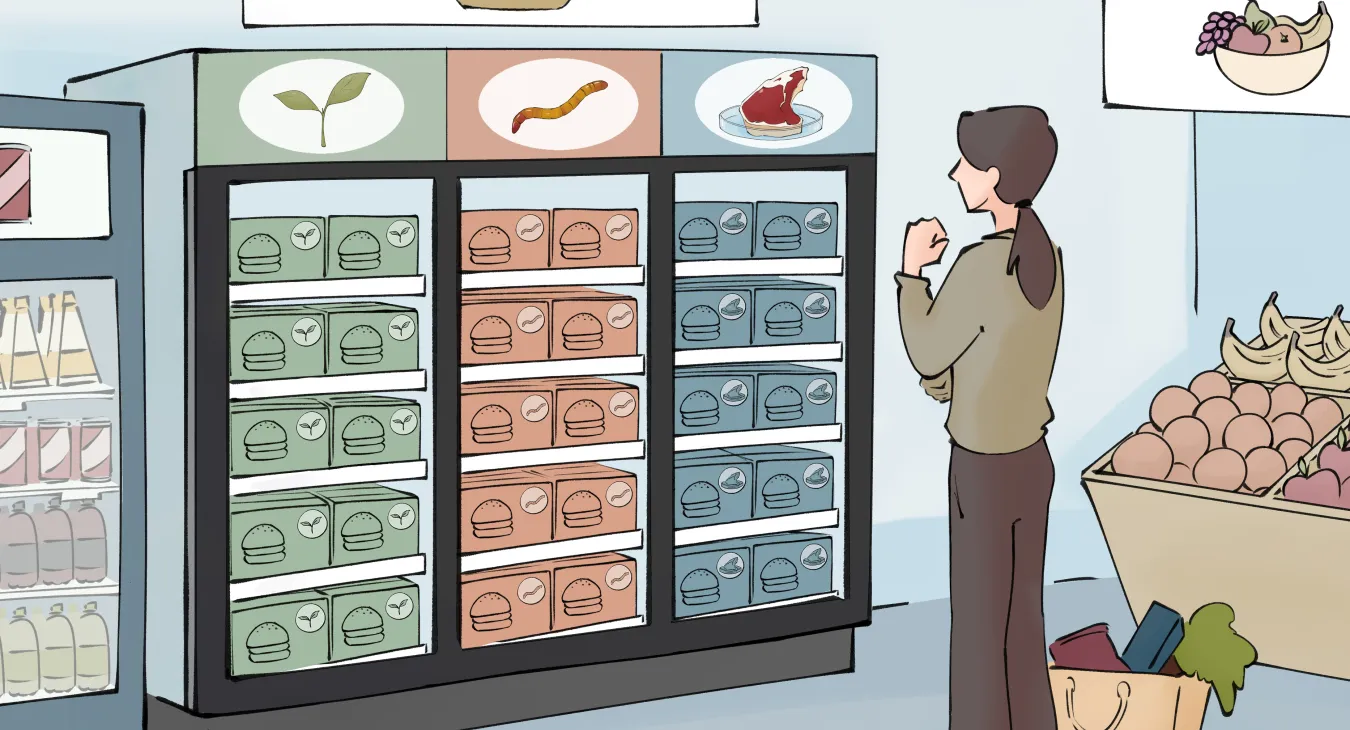
    Plant-based, insect-based, or cultivated meat alternatives—Why do we (not) consume them?

    • written by
    • Lena Szczepanski,
    • Milan Büscher,
    • Lene Strootmann,
    • Florian Fiebelkorn

    Meat alternatives have become a fixture on supermarket shelves. While people have been consuming plant-based alternatives for a long time, the consumption of insects and, in the future, cultivated meat faces major challenges. What factors drive people to consume meat alternatives? And why do many people still find it so difficult to replace meat in their diet? Personal values, product perceptions, and social influence play decisive roles in our food choices, especially when it comes to replacing familiar products with alternatives. In this article, we thus examine the psychological factors that promote or hinder the consumption of meat alternatives, as well as the barriers that still need to be overcome.

    read more
    • Log in to post comments

  • Magazine Issue
    11/2025

    Self-Care in the Digital Age: How We Can Handle Social Media in a Healthy Way

    • written by
    • Marvin Holtwiesche,
    • Mira Fauth-Bühler

    Do you find it difficult to reduce the time you spend on social media in the long term? Are you interested in learning why you often use social media excessively and what negative effects this can have on you? Here, you'll not only find answers but also practical strategies to protect your mental health, helping you achieve a balanced approach to social media use.

    read more
    • Log in to post comments

  • Magazine Issue 11/2025

    Understanding Anxiety, Encouraging Courage: What Families Should Know About Social Anxiety

    written by: Nadine Vietmeier, Jasper Froehlich, Silas Rooß
  • Magazine Issue 11/2025

    Mastering Emotions: How Emotion Regulation Can Boost Your Athletic Performance

    written by: Mira Fauth-Bühler
  • Magazine Issue 11/2025

    Plant-based, insect-based, or cultivated meat alternatives—Why do we (not) consume them?

    written by: Lena Szczepanski, Milan Büscher, Lene Strootmann, Florian Fiebelkorn
  • Magazine Issue 11/2025

    Self-Care in the Digital Age: How We Can Handle Social Media in a Healthy Way

    written by: Marvin Holtwiesche, Mira Fauth-Bühler
  • Magazine Issue 11/2020

    How The Good Place illustrates an unorthodox theory in moral psychology

    written by: Alan Jern
    On The Good Place, people are judged on the morality of virtually everything they do. This might seem unfair, but what really counts as moral and non-moral? Evidence from psychology... more
  • Magazine Issue 01/2020

    Can We Believe in Our Own Lies?

    written by: Fabiana Battista, Ivan Mangiulli, Antonietta Curci, Paul Riesthuis, Henry Otgaar
    Can we believe in our own lies? Such a question eventually boils down to the issue of whether lying affects memory. ­­­­­­­This is particularly relevant in the legal arena, where... more
  • Magazine Issue 01/2020

    Are you Instagram-official? - Love, Social Media, and their Impact on Each Other

    written by: Lili Fejes-Vékássy, Adrienn Ujhelyi
    Have you ever thought about the criteria used for being recognized as an official couple on social media? Maybe you felt annoyed when your partner’s new profile picture had been... more
  • Magazine Issue 12/2019

    Sex differences in the perception of sexual arousal

    written by: Andreas Baranowski, Rudolf Stark
    “Men are from mars, women are from Venus” [1] this saying often appears as common knowledge. Particularly the sexuality of men and women is often considered to be fundamentally different... more
  • Magazine Issue 12/2019

    To which gender’s disadvantage are school grades biased – girls or boys?

    written by: Carolin Schuster
    School grades do not only provide students with feedback on their current performance, they also determine the chances of admission to universities and the success of job applications. The question... more
  • Magazine Issue 12/2019

    What career should I choose? How self-stereotyping can influence career decisions

    written by: Tanja Hentschel, Lisa Horvath
    Stereotypical self-characterizations of women and men can result in different career decisions – contributing to the continuing gender imbalance in leadership and many career fields. We explain how stereotypical self-characterizations... more
  • Load More Issues

In-Mind Blog

  • 16.12.2014 | Solid Science

    Solid science: How graduate students foster research transparency

    written by: Nicole Janz
    Reproducibility is seen as the gold standard for solid science. However, three are few incentive to work transparently, and even less incentives to conduct replication studies. To change this, more and more teachers are assigning replication studies to graduate students as a class assignment. Will this turn early career researchers into witch hunters? more
  • 05.12.2014 | Happiness & Well-being

    Becoming superhuman: Is it all in your mind?

    written by: Mallika Sarma, Cathleen Clerkin
    Everyone loves a good comic book hero, but what if superhuman feats were something you could learn to do in real life? In this post, we will share some recent scientific evidence that suggests that through mindfulness, people can learn to control their minds, bodies, pain tolerance and emotions in ways that seem almost superhuman. more
  • 02.12.2014 | Social Influence & Negotiations

    Who gives a Tweet? Fandom, social identity, and why people take to Twitter

    written by: Jessica Tomory
    When we think of the world in terms of categories and different groups of people, we think of the various groups to which we belong and our identities within such groups. The groups to which we belong impact how we perceive ourselves, how others perceive us, and the extent to which we express our social identities in order to bolster our self-esteem. This blog will examine how and why people are motivated to express their social identities using social media and, more specifically, will propose that Twitter serves an important identity function for group members. more
  • 15.11.2014 | Solid Science

    Is social psychology ready for the big science revolution?

    written by: Frank Bosco
    In this blog post, I will describe perhaps the greatest challenge facing social psychology (and other social sciences) in the coming decades: The curation and increased accessibility of research findings. I describe several big science efforts that lead to an eventual goal – a search engine of research findings capable of producing instant empirical summaries and translating findings using lay terms. more
  • 13.11.2014 | Meaning Making

    Hot or cold morality? (Part 1)

    written by: Andrew Monroe
    How do we make moral judgments? Are people cold, calculating Vulcans? Or are they affectively hot hedonists? Researchers often present morality as a war between vying ‘hot’ and ‘cold’ processes, but in this two-part blog post I argue that the distinction is a false choice. Morality is both hot and cold, but not in the way previous research leads people to believe. more
  • 12.11.2014 | Culture

    Sorry, the relationship with your mother still matters for your achievement in life

    written by: Marieke van Egmond
    Play dates or homework? Piano lessons or TV? Mothers generally want the best for their children. However, what is ‘the best’? Happiness or academic achievement? And, how should parents go about raising their children in the ‘best’ way possible? One answer to this question is to be a ‘tiger parent’. This rather harsh ‘Chinese’ parenting style has been advocated to guarantee successful children. In this post, I will discuss if this means that all mothers should become a bit more ferocious when it comes to parenting. more
  • Load more blog posts

Book Reviews

The meaning: poetic and spiritual reflections

by: Richard Skaff

Free will and consciousness: how might they work?

by: Wim Pouw

Handbook of cxperimental existential psychology

by: Wim Pouw

Confessions of a sociopath: A life spent hiding in plain sight

by: Irena Domachowska

Skill sheets. An integrated approach to research, study and management

by: Irena Domachowska

Most Read

  • Magazine Issue 06/2024

    Sleep before, during and after the Olympic Games: an important determinant of sports performance

    written by: Kerstin Hoedlmoser, Patricia Frytz, Daniel Erlacher, Michele Lastella, Jacopo Vitale, Mathieu Nedelec
  • Magazine Issue 12/2019

    Sex differences in the perception of sexual arousal

    written by: Andreas Baranowski, Rudolf Stark
  • Magazine Issue 11/2015

    Can you nonbelieve it: What happens when you do not believe in your memories?

    written by: Jianqin Wang, Henry Otgaar, Mark Howe, Tom Smeets, Harald Merckelbach
  • Magazine Issue 12/2006

    Engagement: A Source of Value, Quality of Life, or Both?

    written by: Janina Marguc
  • Magazine Issue 09/2008

    Reconsidering Race in the Genetic Era

    written by: Chris Buchholz

The Inquisitive Mind Magazine is supported by:

  • DGPs
  • C-SEB

Menu

  • The Magazine
  • Blog
  • Book Reviews
  • The Foundation
  • Donate
  • facebook
  • twitter
  • instagram
  • print

About Us

In-Mind is a voluntary science communication project. We enable scientifically working psychologists to present their research topics in a scientifically sound, understandable and entertaining way for an interested audience: Psychology by scientists for everyone....more

Footer menu

  • Contact
Clear keys input element