  • INT
  • DE
  • FR
  • IT
  • NL

User account menu

  • Log in
Home
  • The Magazine
    • For Authors
    • Magazine Staff
  • Blog
    • For Authors
  • Book Reviews
  • The Foundation
    • Credits
  • Donate

Psychology for You!

  • Magazine Issue
    11/2025

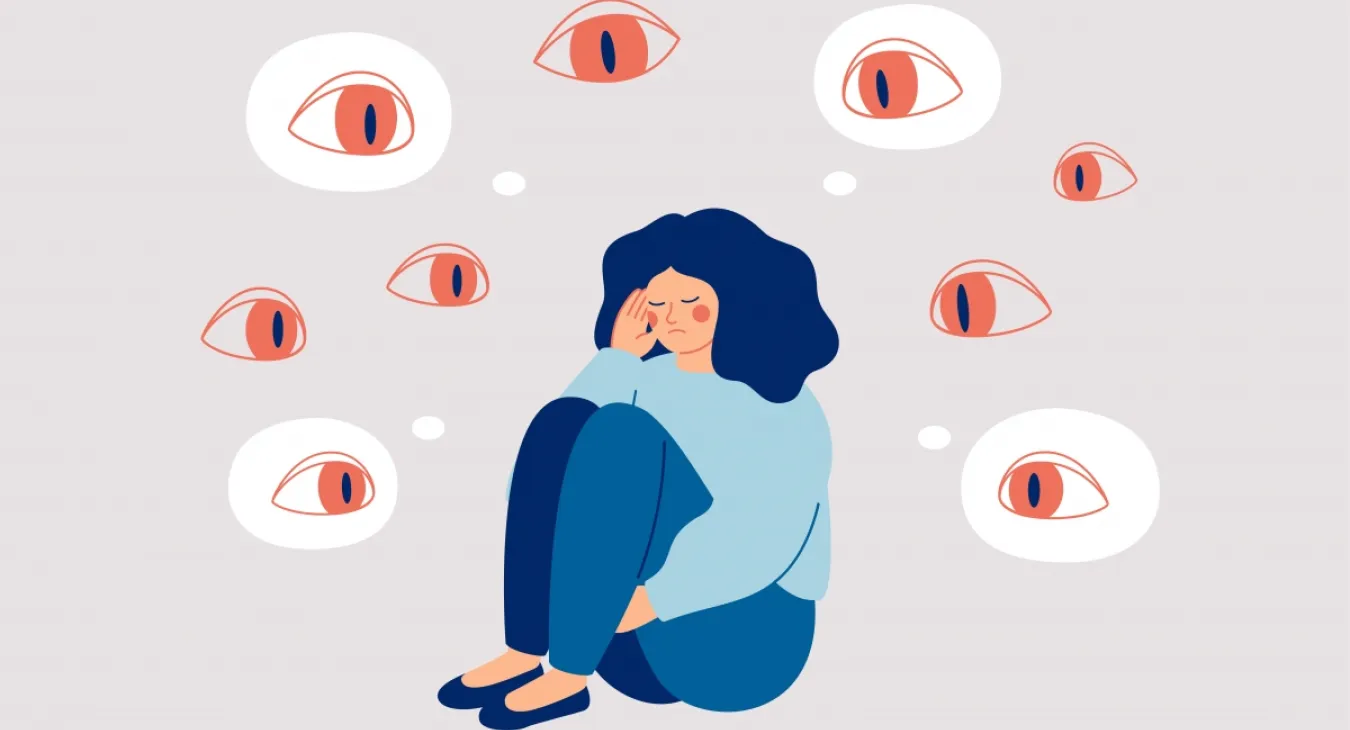
    Understanding Anxiety, Encouraging Courage: What Families Should Know About Social Anxiety

    • written by
    • Nadine Vietmeier,
    • Jasper Froehlich,
    • Silas Rooß

    Social anxiety is among the most common psychological challenges in childhood and adolescence—and it also presents major challenges for parents. How can they support their children without overwhelming them? What role does parental behavior play in the development and maintenance of anxiety? This article introduces the SPACE therapy program—a research-based parent training that shows how mothers and fathers can empathetically support their children in gradually overcoming social anxiety.

    read more
    • Log in to post comments

  • Magazine Issue
    11/2025

    Mastering Emotions: How Emotion Regulation Can Boost Your Athletic Performance

    • written by
    • Mira Fauth-Bühler

    Imagine standing on a balance beam. Your heart races, your palms sweat—your body is primed for peak performance. Now comes the crucial decision: how will you steer your emotions? Will you let the tension paralyze you, or harness it as your driving force? Emotion regulation doesn’t mean avoiding fear; it means transforming it into focus and confidence. In this article, you’ll discover how targeted emotion regulation techniques can help you unlock your full potential and perform at your best, even under pressure.

    read more
    • Log in to post comments

  • Magazine Issue
    11/2025

    Plant-based, insect-based, or cultivated meat alternatives—Why do we (not) consume them?

    • written by
    • Lena Szczepanski,
    • Milan Büscher,
    • Lene Strootmann,
    • Florian Fiebelkorn

    Meat alternatives have become a fixture on supermarket shelves. While people have been consuming plant-based alternatives for a long time, the consumption of insects and, in the future, cultivated meat faces major challenges. What factors drive people to consume meat alternatives? And why do many people still find it so difficult to replace meat in their diet? Personal values, product perceptions, and social influence play decisive roles in our food choices, especially when it comes to replacing familiar products with alternatives. In this article, we thus examine the psychological factors that promote or hinder the consumption of meat alternatives, as well as the barriers that still need to be overcome.

    read more
    • Log in to post comments

  • Magazine Issue
    11/2025

    Self-Care in the Digital Age: How We Can Handle Social Media in a Healthy Way

    • written by
    • Marvin Holtwiesche,
    • Mira Fauth-Bühler

    Do you find it difficult to reduce the time you spend on social media in the long term? Are you interested in learning why you often use social media excessively and what negative effects this can have on you? Here, you'll not only find answers but also practical strategies to protect your mental health, helping you achieve a balanced approach to social media use.

    read more
    • Log in to post comments

  • Magazine Issue 11/2025

    Understanding Anxiety, Encouraging Courage: What Families Should Know About Social Anxiety

    written by: Nadine Vietmeier, Jasper Froehlich, Silas Rooß
  • Magazine Issue 11/2025

    Mastering Emotions: How Emotion Regulation Can Boost Your Athletic Performance

    written by: Mira Fauth-Bühler
  • Magazine Issue 11/2025

    Plant-based, insect-based, or cultivated meat alternatives—Why do we (not) consume them?

    written by: Lena Szczepanski, Milan Büscher, Lene Strootmann, Florian Fiebelkorn
  • Magazine Issue 11/2025

    Self-Care in the Digital Age: How We Can Handle Social Media in a Healthy Way

    written by: Marvin Holtwiesche, Mira Fauth-Bühler
  • Magazine Issue 04/2024

    Does nudging have a place in politics? How decision-making contexts inevitably influence our behavior

    written by: Mario Herberz
    We like to see ourselves as masters of our decisions. However, psychological research has found that the context that surrounds our decisions influences our behavior often unnoticed - for better... more
  • Magazine Issue 03/2024

    Context matters: Why women are not worse negotiators than men

    written by: Moritz Burmester, Yannik Escher, Danna Oomen, Hannes Petrowsky
    Mastering the art of negotiation is key to being successful in everyday life and in a highly competitive and dynamic professional world. One widespread belief among laypeople is that women... more
  • Magazine Issue 02/2024

    That's cringe! – Wait a minute. What is cringe?

    written by: Thomas Feiler, Fabian Hutmacher
    The word “cringe” is on everyone's lips. What does it mean? How can it be described? An attempt to explain the phenomenon using established psychological constructs. more
  • Magazine Issue 02/2024

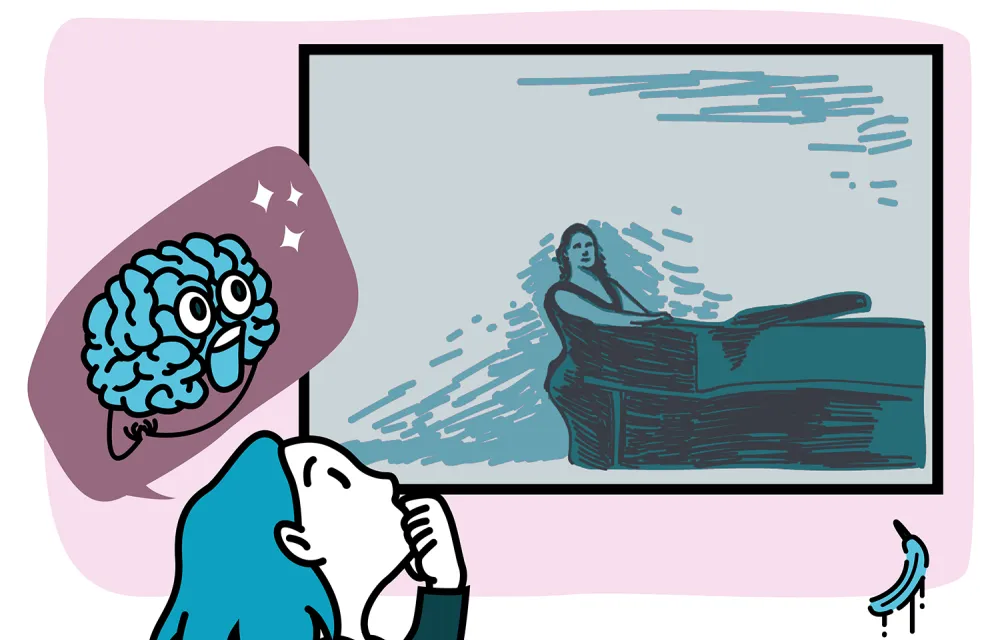
    Is there an art center in our brain? That’s bananas!

    written by: Sophie G. Elschner
    Artworks can move us deeply. But does that mean our brain treats them in a special way? We can find out by looking at how the brain processes art and... more
  • Magazine Issue 06/2023

    Learning styles: Why they don't exist but still persist

    written by: Martin Daumiller, Benedikt Wisniewski
    It is a common myth that for optimal learning, individual learning styles should be identified and specifically supported. This might include identifying someone as a visual learner and designing the... more
  • Magazine Issue 12/2021

    Are Victim or Eyewitness Statements Credible? Several Ways to Check Them

    written by: Nurul Arbiyah, Henry Otgaar, Eric Rassin
    In 2014, two teachers and six janitors were accused of child sexual abuse at Indonesia's Jakarta International School (JIS). Three preschool children reported that they had been repeatedly sexually abused... more
  • Load More Issues

In-Mind Blog

  • 25.11.2015 | Big Questions in Society, Current Events

    Empathy and prejudice after attacks in Paris and Beirut

    written by: Marly van Oirschot
    In this blog, I will try to explain why we showed more empathy for victims in Paris than in Beirut, and how feelings of fear after such a terrorist attack can lead to prejudice against out-groups, especially against Muslims. more
  • 11.10.2015 | Self-Control & Decision-Making

    What does your selfie say about you?

    written by: Lin Qiu
    Selfie is a new form of self-expression in this digital age. In this post, I will discuss our research on how selfies reveal the personality of their owners and how people judge others’ personality based on selfies. more
  • 31.08.2015 | Culture

    Bicultural minds: How capable are you in responding culturally appropriate?

    written by: Katerina Pouilasi
    When individuals live actively with two cultures (in families, organizations or society at large) they, partly unconsciously, partly deliberately, may change towards acquiring a ‘bicultural mind’. I will discuss here, is whether these individuals are capable of spontaneously producing appropriate responses that fit the expectation patterns of either of their two cultures. more
  • 21.08.2015 | Big Questions in Society, Current Events, Gender

    Why gender neutral toy aisles might help children’s development stay on target

    written by: Cathleen Clerkin
    In this blog post I will discuss how Target’s recent decision to do away with gender specific toy aisles could actually help children develop new cognitive skills, and as well as increase their willingness to play with different types of toys. more
  • 01.08.2015 | Self-Control & Decision-Making

    Why do we still have a cognitive bias that makes us send innocent people to jail? – Explanations of the confirmation bias

    written by: Marly van Oirschot
    The confirmation bias – seeking and interpreting information to support your pre-existing beliefs – can have tremendous consequences. In this blog, I will explain the existence of the confirmation bias in the criminal justice system and give two possible explanations to why we still have this bias. more
  • 26.07.2015 | Political Psychology, Race & Ethnicity

    Does it matter if people are aware of their implicit racial bias?

    written by: Aaron Moss
    In this blog post, I discuss how people respond to information about their implicit racial bias—automatic attitudes and beliefs that favor one ethnic group over another. Although people can be defensive, emerging research suggests there are benefits to accepting implicit racial bias and being aware of this subtle prejudice. more
  • Load more blog posts

Book Reviews

The meaning: poetic and spiritual reflections

by: Richard Skaff

Free will and consciousness: how might they work?

by: Wim Pouw

Handbook of cxperimental existential psychology

by: Wim Pouw

Confessions of a sociopath: A life spent hiding in plain sight

by: Irena Domachowska

Skill sheets. An integrated approach to research, study and management

by: Irena Domachowska

Most Read

  • Magazine Issue 06/2024

    Sleep before, during and after the Olympic Games: an important determinant of sports performance

    written by: Kerstin Hoedlmoser, Patricia Frytz, Daniel Erlacher, Michele Lastella, Jacopo Vitale, Mathieu Nedelec
  • Magazine Issue 12/2019

    Sex differences in the perception of sexual arousal

    written by: Andreas Baranowski, Rudolf Stark
  • Magazine Issue 11/2015

    Can you nonbelieve it: What happens when you do not believe in your memories?

    written by: Jianqin Wang, Henry Otgaar, Mark Howe, Tom Smeets, Harald Merckelbach
  • Magazine Issue 12/2006

    Engagement: A Source of Value, Quality of Life, or Both?

    written by: Janina Marguc
  • Magazine Issue 09/2008

    Reconsidering Race in the Genetic Era

    written by: Chris Buchholz

The Inquisitive Mind Magazine is supported by:

  • DGPs
  • C-SEB

Menu

  • The Magazine
  • Blog
  • Book Reviews
  • The Foundation
  • Donate
  • facebook
  • twitter
  • instagram
  • print

About Us

In-Mind is a voluntary science communication project. We enable scientifically working psychologists to present their research topics in a scientifically sound, understandable and entertaining way for an interested audience: Psychology by scientists for everyone....more

Footer menu

  • Contact
Clear keys input element